India is a land of timeless traditions. At the heart of this heritage are skilled hands that transform raw materials into works of art.These are not just makers. They are storytellers.Each thread, print, or carving they create carries generations of knowledge and emotion.
Who is a Karigar?
The word karigar means a master craftsperson. Someone who shapes thread, clay, wood, or metal into something meaningful that stays for alive for generations.
Each Indian artisan works with their hands — not machines. Their process is slow, deliberate, and full of detail.
From weaving sarees to carving wood, their skill cannot be copied by automation.
Their touch is what gives each piece its soul.
What is Karigari?
Karigari is the art and technique behind handmade products. It’s the patient embroidery. The perfect weave. The hand-cut block print.
Karigari requires time, skill, and deep focus. It’s what separates a handcrafted piece from factory-made fashion.
The Art of Handloom
India is the world’s second-largest producer of handloom textiles. Over 4.3 million people are directly or indirectly employed in the handloom sector (Source: Ministry of Textiles).
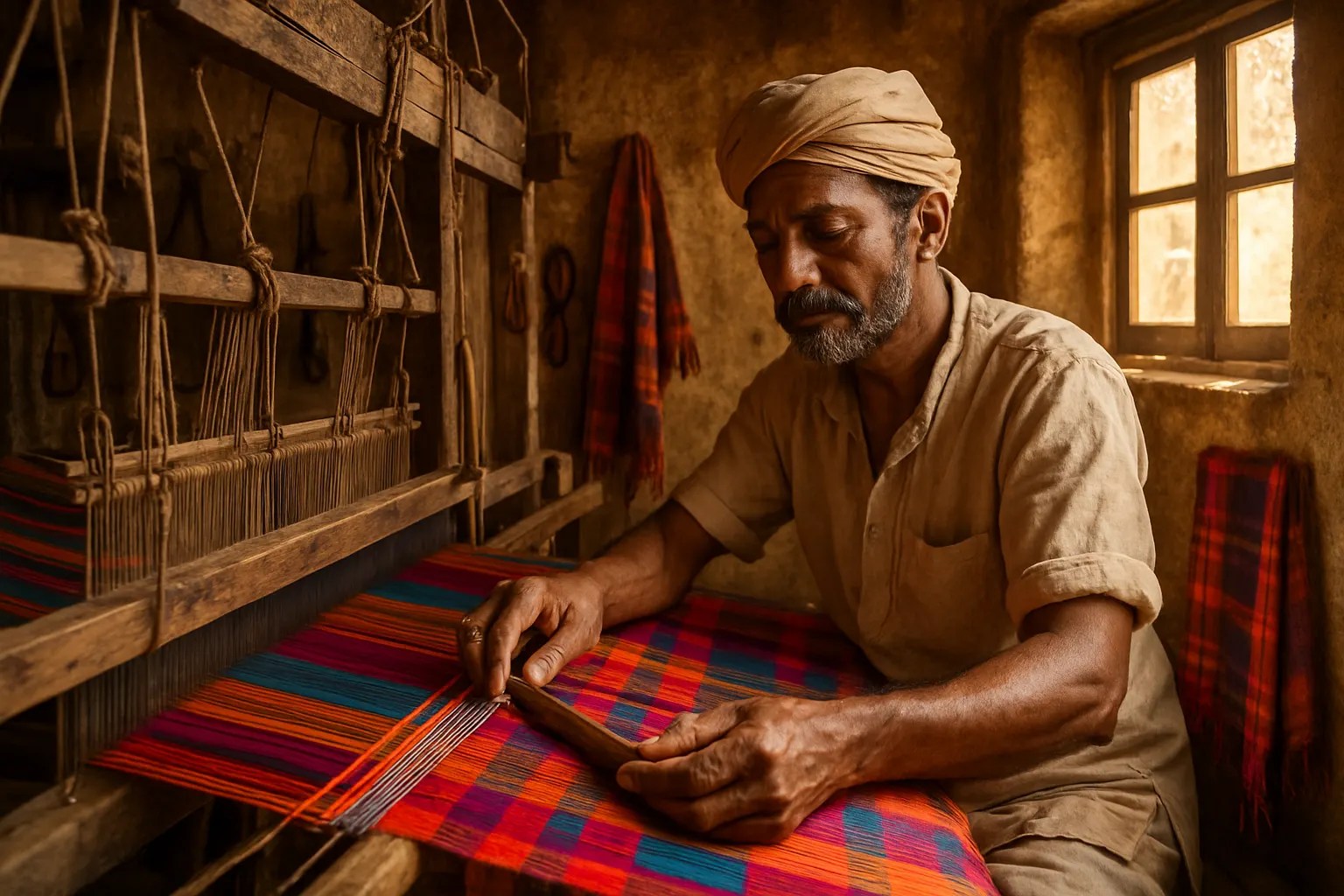
Karigars weave on pit looms or frame looms, using tools like wooden shuttles. They interlace vertical (warp) and horizontal (weft) threads — one line at a time. It’s slow fashion at its finest.
Popular fabrics and styles include:
Banarasi Silk Sarees – Known for their rich zari work
Jamdani Weaves – From Bengal, with intricate motifs
Kutch Shawls – Vibrant and geometric
Maheshwari and Chanderi – Lightweight, festive, and elegant
Why Handloom Feels Different?
Handloom fabrics are breathable and soft. They age beautifully. They carry warmth — both physically and emotionally.
Unlike machine-made cloth, handloom textiles have:
Natural slubs and texture
Slight irregularities — signs of human effort
Better airflow, ideal for tropical weather
Beyond Textiles: Handicrafts from Across India
The Indian artisans’ skills go beyond weaving.
They also create:
Block-printed suits from Rajasthan
Hand-stitched quilts and throws
Terracotta pottery and brass home décor
Hand-carved wooden trays and kitchenware
Ethnic jewelry using silver, beads, and fabric
Each region brings its own style. Each piece is deeply rooted in local culture and history.
Why Supporting Karigars Matters?
When you choose handmade, you help:
Preserve ancient traditions
Provide fair wages to rural artisans
Promote women-led artisan groups
Reduce carbon emissions and industrial waste
Did you know?
Handloom weaving uses 10 times less energy than power loom production. Most karigar use natural fibers like cotton, silk, or wool, and plant-based dyes.
Challenges Karigars Face
Despite their value, karigars face daily challenges:
Low wages from middlemen
Limited access to direct markets
Unstable demand
Impact of fast fashion
Lack of design training
Yet, they continue. They work with dignity, patience, and pride, passing their skills to the next generation.
Technology Is Opening New Doors
Today, e-commerce platforms like Kaarigar are changing the game. Handcrafted products are now reaching conscious customers across the world.
Digital tools allow artisans to:
Showcase their work online
Get paid fairly
Connect with buyers directly
Sustain their communities
Our Commitment at Kaarigar
We work directly with artisan clusters to bring you:
● Handloom Sarees
Traditional weaves in soft silk and cotton. Perfect for festive wear and weddings.
● Handwoven Stoles and Shawls
Lightweight layers for all seasons. Crafted by karigars in Himachal and Bengal.
● Handcrafted Home & Gifting
Ethical Diwali gifts, textile décor, and jewelry with a story. Every product is ethically made. Every piece supports a karigar’s livelihood.
How to Identify Real Handcrafted Products
In a world of machine-made lookalikes, here’s how to spot the real, handmade treasures:
Natural Materials
Look for cotton, silk, wool, jute, or linen — not synthetic blends.Imperfections with Character
Slight irregularities in weave, print, or color are signs of human hands at work, not factory flaws.Handpainted Variations
Handpainted fabrics, pottery, or home décor often have slight differences in brush strokes or color tone — proof that each piece is individually crafted, not printed by a machine.Official Certifications
Tags like Handloom Mark, Craftmark, or GI tag confirm authenticity and origin.Eco-Friendly Packaging
Responsible packaging using recycled or biodegradable materials is often used by ethical handmade brands.Clear Artisan Information
Real handcrafted products often come with a story — who made it, where it comes from, and what technique was used.Subtle Texture and Depth
Handwoven fabrics feel different — slightly textured, with rich visual depth that mass-produced fabric lacks.Pattern Irregularities
In block prints or embroidery, slight misalignments or irregular spacing are a natural result of handwork.Visible Thread Ends or Knots
In handloom textiles, small knots or thread joins are a sign the product was woven, not manufactured.Limited Editions
Handcrafted products are made in small batches or as one-of-a-kind pieces. Mass production rarely applies.Sold by Ethical or Artisan-First Brands
When buying handmade, trust brands that work directly with artisan communities and share transparent sourcing details.
Why karigari matters?
Choosing handcrafted isn’t just a style choice. It’s a stand. It’s a vote for culture, quality, and sustainability.
At Kaarigar, we believe in slow fashion, fair pay, and artisan pride. Every product tells a story. Every purchase creates impact.
Make a Difference Today
Support Indian karigars.
Wear handloom.
Gift handicrafts.
Celebrate tradition.
A Market Ready for Change
According to a 2023 report by McKinsey, 67% of global consumers now consider the sustainability of a product before buying. In India, there’s a growing interest in heritage textiles and sustainable apparel, particularly among urban millennials and Gen Z.
This shift opens up opportunities for artisan-made handloom sarees, organic cotton suits, and handcrafted stoles to become not just cultural symbols — but mainstream fashion essentials.
A Market Ready for Change
According to a 2023 report by McKinsey, 67% of global consumers now consider the sustainability of a product before buying. In India, there’s a growing interest in heritage textiles and sustainable apparel, particularly among urban millennials and Gen Z.
This shift opens up opportunities for artisan-made handloom sarees, organic cotton suits, and handcrafted stoles to become not just cultural symbols — but mainstream fashion essentials.
Shop now the Karigar-made
Explore sarees, suits, stoles, and more — all handmade, all meaningful.
- Add to WishlistAdd to Wishlist

- Add to WishlistAdd to Wishlist


Frequently Asked Questions (FAQs)
What does the word "Karigar" mean?
A karigar is a skilled artisan or craftsperson who works with their hands to create handmade products. In India, karigars are known for their expertise in weaving, embroidery, printing, pottery, jewelry-making, and more.
What is the difference between handloom and powerloom?
Handloom refers to fabric woven by hand on manual looms by artisans. Powerloom uses machines for mass production. Handloom is more eco-friendly, uses natural fibers, and supports local karigars.
How can I identify real handloom sarees or suits?
Genuine handloom textiles often have irregularities in the weave, natural slubs, and use eco-friendly dyes. Look for certifications like the Handloom Mark, G.I. tag and buy from verified artisan-based platforms.
Why are handcrafted products more expensive?
Handcrafted items take longer to produce and involve high skill. The price reflects the karigar’s time, craftsmanship, and the use of sustainable, often organic, materials.
Which are the most popular handloom fabrics in India?
Some of the most renowned include:
Banarasi Silk
Jamdani
Chanderi and Maheshwari
Kani Shawls from Kashmir
Khadi Cotton
What kind of products are made by Indian karigars today?
Karigars create a wide range of products such as:
Handloom sarees and suits
Cotton stoles and shawls
Block-printed fabrics
Terracotta pottery and brass décor
Handcrafted jewelry and accessories
How do these products support rural artisans in India?
Buying handcrafted products provides income to karigars, supports women-led artisan clusters, preserves traditional skills, and strengthens rural economies.
Where can I buy authentic handloom and handicraft products online?
You can shop directly from platforms like www.kaarigaronline.com that source products from real karigars. They offer handloom sarees, ethnic suits, stoles, jewelry, and home décor, all handmade and ethically sourced.